Thursday, 17 May 2018

'Slumber Song of the Madonna' and 'Pirates' - Alfred Noyes

                        
May is traditionally the month of Our Lady, the mother of Jesus Christ.
Jesus, wholly God and wholly man, was born of the virgin Mary,  and was subject to the parental love and care of his earthly parents, Mary and Joseph.
The following poem, 'Slumber Songs of the Madonna', by Alfred Noyes, reflects as far as the poet was able, the love of Mary for her baby son. Some may consider this a 'Christmas' poem, but the reality is that  Christ's birth is celebrated daily in men's hearts. Indeed our good neighbours, the 'Sons of the Most Holy Redeemer' (F.SS.R.) community, at Golgotha Monastery, Papa Stronsay, celebrate the birth of Our Lord on the 25th day of every month throughout the year.

                                                                       *************

                                                        Slumber Songs of the Madonna
                                                                                
                                                                                  PRELUDE

Dante saw the great white Rose  
          Half unclose;
Dante saw the golden bees
    Gathering from its heart of gold
            Sweets untold,
Love's most honeyed harmonies.

Dante saw the threefold bow
               Strangely glow,
Saw the Rainbow Vision rise,
And the Flame that wore the crown
               Bending down
O'er the flowers of Paradise.

Something yet remained, it seems;
              In his dreams
Dante missed - as angels may
     In their white and burning bliss -
               Some small kiss
Mortals meet with every day.

Italy in splendour faints
               Neath her saints!
O, her great Madonnas, too,
     Faces calm as any moon
             Glows in June,
Hooded with the night's deep blue!

What remains?  I pass and hear
            Everywhere,
Ay, or see in silent eyes
     Just the song she still would sing
              Thus - a swing
O'er the cradle where he lies.
                                                   
                                                                                               1

Sleep, little baby, I love thee,
Sleep, little king, I am bending above thee!
   How should I know what to sing
                                                  Here in my arms as I swing thee to sleep?
  Hushaby low,
 Rockaby so,
Kings may have wonderful jewels to bring,
Mother has only a kiss for her king!
Why should my singing so make me to weep?
Only I know that I love thee, I love thee,
  Love thee, my little one, sleep.


                                                                                         II


                                                                           Is it a dream?   Ah, yet, it seems
   Not the same as other dreams!
I can but think that angels sang,
   When thou wast born, in the starry sky,
And that their golden harps out-rang
    While the silver clouds went by!


The morning sun shuts out the stars,
    Which are much loftier than the sun;
But, could we burst our prison bars
    And find the Light whence light began,
The dreams that heralded thy birth
Were truer than the truths of earth;
And, by that far immortal Gleam,
Soul of my soul, I still would dream!


A ring of light was round thy head,
The great-eyed oxen nigh thy bed
Their cold and innocent noses bowed!
Their sweet breath rose like an incense cloud
In the blurred and mystic lanthorn light.


About the middle of the night
The black door blazed like some great star
With a glory from afar,
Or like some mighty chrysolite
Wherein an angel stood with white
Blinding arrowy bladed wings
Before the throne of the King of kings;
And, through it, I could dimly see
A great steed tethered to a tree.


Then, with crimson gems aflame
Through the door the three kings came,
And the black Ethiop unrolled
The richly broidered cloth of gold,
                                                                And poured forth before thee there
                                                                Gold and frankincense and myrrh!


                                                                                         iii

See, what a wonderful smile!  Does it mean
     That my little one knows of my love?
Was it meant for an angel that passed unseen,
     And smiled at us both from above?
Does it mean that he knows of the birds and the flowers
That are waiting to sweeten his childhood’s hours,
And the tales I shall tell and the games he will play,
And the songs we shall sing and the prayers we shall pray
      In his boyhood’s May,
     He and I, one day?


                                                                                            IV

For in the warm blue summer weather
We shall laugh and love together:
      I shall watch my baby growing,
I shall guide his feet,
      When the orange trees are blowing
And the winds are heavy and sweet!
      When the orange orchards whiten
      I shall see his great eyes brighten
To watch the long-legged camels going
    Up the twisted street,
When the orange trees are blowing
       And the winds are sweet.

What does it mean?   Indeed it seems
A dream!   Yet not like other dreams!

We shall walk in pleasant vales,
      Listening to the shepherd’s song
I shall tell him lovely tales
      All day long:
He shall laugh while mother sings
Tales of fishermen and  kings.
He shall see them come and go
   O’er the wistful sea,
Where rosy oleanders blow
     Round blue Lake Galilee,
Kings with fisher’s ragged coats
And silver nets across their boats,
Dipping through the starry glow,
With crowns for him and me!
 Ah, no;
Crowns for him, not me!

Rockaby so!   Indeed, it seems
A dream!  Yet not like other dreams!
               
                                                                                             V
Ah, see what a wonderful smile again!
      Shall I hide it away in my heart,
To remember one day in a world of pain
      When the years have torn us apart,
Little babe,
When the years have torn us apart?
Sleep, my little one, sleep,
     Child with the wonderful eyes,
    Wild miraculous eyes,
Deep as the skies are deep!
What star-bright glory of tears
Waits in you now for the years
That shall bid you waken and weep?
Ah, in that day, could I kiss you to sleep
Then, little lips, little eyes, 
Little lips that are lovely and wise,
Little lips that are dreadful and wise!


                                                                                          VI

Clenched little hands like crumpled roses
  Dimpled and dear,
Feet like flowers that the dawn uncloses,
 What do I fear?
Little hands, will you ever be clenched in anguish?
White little limbs, will you droop and languish?
   Nay, what do I hear?
I hear a shouting, far away,
You shall ride on a kingly palm-strewn way
   Some day!


But when you are crowned with a golden crown
        And throned on a golden throne,
You’ll forget the manger of Bethlehem town
      And your mother that sits alone
Wondering whether the mighty king
Remembers a song she used to sing,
    Long ago,

    “Rockaby so,
Kings may have wonderful jewels to bring,
Mother has only a kiss for her king!”  .  .  .


Ah, see what a wonderful smile, once more;
        He opens his great dark eyes!
Little child, little king, nay, hush, it is o’er
        My fear of those deep twin skies,  -
        Little child,
         You are all too dreadful and wise!


                                                                                         VII

But now you are mine, all mine,
       And your feet can lie in my hand so small,
And your tiny hands in my heart can twine,
       And you cannot walk, so you never shall fall,
Or be pierced by the thorns beside the door,
Or the nails that lie upon Joseph’s floor;
Through sun and rain, through shadow and shine,
You are mine, all mine!

                                         Alfred Noyes.
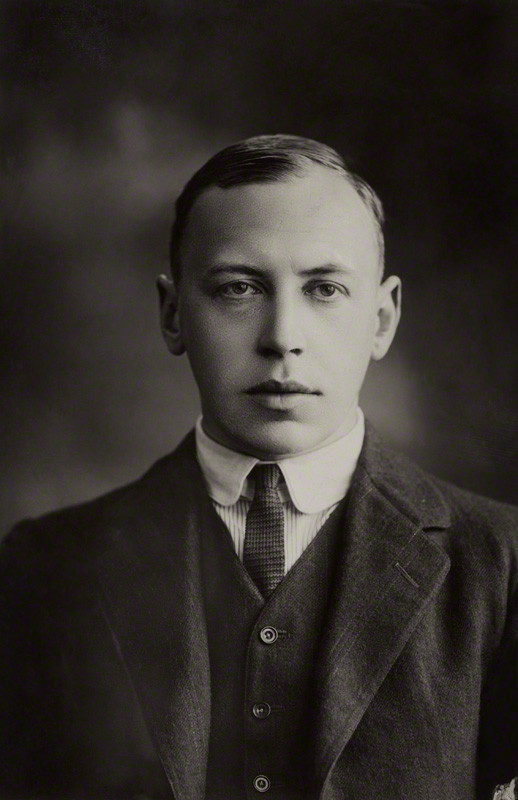


Portrait of Alfred Noyes.jpg


               Portrait of Alfred Noyes, by Alexander Bassano, 1922.                    (Wikimedia Commons)


Alfred Noyes, born 16 September, 1880, Wolverhampton, England.  Died 25 June 1958, Isle of Wight, England.


Prolific writer and poet. Depicted the evils of war in his writings and poetry, but accepted the principle of a 'just war'.

In 1907 he married an American lady, Garnett Daniels. They lived in both England and the USA, where from 1914 to 1923,  Noyes was appointed visiting Professor of modern English Literature at Princeton University. In 1926 his wife died in France whilst they were visiting friends.

In 1927 he married Mary Angela Weld-Blundell, a widow, whose husband had been killed in the Great War. This English lady was a Catholic, and later that same year Alfred Noyes converted to Catholicism. In 1929 they settled permanently at Lisle Combe, on the Undercliffe, near Ventnor, on the Isle of Wight. 

As a young man Noyes suffered from defective vision which debarred him from serving on the Front line in World War 1. Instead he was attached to the Foreign Office where he worked with the author John Buchan on propaganda. In later life Noyes' vision deteriorated to the extent that he was unable to write his work himself, and was obliged to resort to dictation. 
                                                                                

(For a far more comprehensive and detailed  account of the life and achievements of Alfred Noyes, I strongly recommend the article in Wikipedia.)


 PIRATES

Come to me, you with the laughing face, in the night as I lie
Dreaming of days that are dead and of joys gone by;
Come to me, comrade, come through the slow-dropping rain,
Come from the grave in the darkness and let us be playmates again.


Let us be boys together to-night, and pretend as of old
We are pirates at rest in a cave among huge heaps of gold,
Red Spanish doubloons and great pieces of eight, and muskets and swords,
And a smoky red camp-fire to glint, you know how, on our ill-gotten hoards.


The old cave in the fir-wood that slopes down the hills to the sea
Still is haunted, perhaps, by young pirates as wicked as we:
Though the fir with the magpie’s big mud-plastered nest used to hide it so well,
And the boys in the gang had to swear that they never would tell.


Ah, that tree; I have sat in its boughs and looked seaward for hours.
I remember the creak of its branches, the scent of the flowers
That climbed round the mouth of the cave: it is odd I recall
Those little things best, that I scarcely took heed of at all.


I remember how brightly the brass on the butt of my spy-glass gleamed
As I climbed through the purple heather and thyme to our eyrie and dreamed;
I remember the smooth glossy sun-burn that darkened our faces and hands
As we gazed at the merchantmen sailing away to those wonderful lands.


I remember the long,  long sigh of the sea as we raced in the sun,
To dry ourselves after our swimming; and how we would run
With a cry and a crash through the foam as it creamed on the shore,
Then back to bask in the warm dry gold of the sand once more.


Come to me, you with the laughing face, in the gloom as I lie,
Dreaming of days that are dead and of joys gone by;
Let us be boys together to-night and pretend as of old
We are pirates at rest in a cave among great heaps of gold.


Come;  you shall be chief.  We’ll not quarrel, the time flies so fast.
There are ships to be grappled, there’s blood to be shed, ere our playtime be past.
No;  perhaps we will quarrel, just once, or it scarcely will seem
So like the old days that have flown  from us both like a dream.


Still;  you shall be chief in the end;  and then we’ll go home
To the hearth and the tea and the books that we loved:  ah, but come,
Come to me, come through the night and the slow-dropping rain;
Come, old friend, come thro’ the darkness and let us be playmates again.
                                       Alfred Noyes.
                                      
NB. If you like this poetry, there are two links below which will lead you to other works by Alfred Noyes:-

http://whitesmokeahoy.blogspot.co.uk/2009/11/alfred-noyes-english-catholic-poet-1880.html
http://whitesmokeahoy.blogspot.co.uk/2011/06/song-of-wooden-legged-fiddler-by-alfred.html
                                          

                                                                        *************


Thursday, 5 April 2018

Christ appeared to His followers on at least ten occasions after His Resurrection


Jesus was well aware that immediately after his crucifixion and death,  His followers would be filled with fear and uncertainty about the future. At that stage they did not understand why events had unfolded in the manner that they did, and it was only later through the power of the Holy Ghost , that their eyes and minds were opened.

To reinforce and strengthen the faith of His disciples, and to remove  their doubts  concerning His  resurrection from the dead, Our Lord Jesus Christ  appeared to his followers and disciples on at least ten occasions after His resurrection:-

 
 First,  at the sepulchre by the holy women; Mark 16 v 9-10.  John20 v 14-18

Second,  by the women returning from the sepulchre; Matthew 28 v 9-10.  Mark 16 v 12

Third,  by Peter; Luke 24 v 12, v 35

Fourth,  by the two going to Emmaus; Luke 24 v 18-32

Fifth,  in Jerusalem, when Thomas was not present; John 20 v 19-23

Sixth,  when Thomas saw Him; John 20 v 26-29

Seventh,  on the sea of Tiberias; John 21 v 1-14

Eighth,  by all the eleven  on a mountain of Galilee, mentioned by Matthew; Matthew 28  v  17-19

Ninth,  when for the last time He sat at meal with the disciples; M ark 16  v 14-18.  Luke 24 v 36-49

Tenth,  when He was seen no longer upon earth, but ascending into heaven  in a cloud. Luke 24 v.  50-53

Additionally St John, in his epilogue, writes of  ‘ many other signs Jesus worked in the sight of His disciples, which are not written down’. John 20 v 30


Today at Mass, the Gospel was taken from St John Ch. 21 verses 1-14. I find  this particular Gospel  especially  positive and affirmative in its message of Christ’s victory over death,  depicted by His resurrection from the dead, and His subsequent appearance to some of his closest apostles and disciples. The miracle of the catch of fish and the appearance of Christ in person sharing a meal with His apostles, a meal prepared by Christ Himself, I find truly symbolic when related to receiving Holy Communion at Mass. Of course Holy Communion is the Body and Blood of Our Lord Jesus Christ, rather than just a meal as would have been the case in the Gospel incident, nevertheless for me, the symbolism is still there.


                'Miraculous draught of fish' (1444) - Konrad Witz 

Easter Wednesday.  Gospel:  John xxi. v 1-14.

‘At that time, Jesus showed Himself again to His disciples at the sea of Tiberias. And He showed Himself after this manner:   There were together Simon Peter, and Thomas who is called Didymus, and Nathaniel, who was of Cana in Galilee, and the sons of Zebedee, and two others of His disciples.  Simon Peter saith to them:  I go afishing.  They say to him:  we also come with thee.  And they went forth, and entered into the ship: and that night they caught nothing.  But when the morning was come, Jesus stood on the shore;  yet His disciples knew not that it was Jesus.  Jesus therefore said to them:  Children, have you nothing to eat?  They answered Him:  No.  He saith to them:  Cast the net on the right side of the ship, and you shall find.  They cast therefore, and now they were not able to draw it, for the multitude of fishes.  That disciple therefore whom Jesus loved, saith to Peter:  It is the Lord.  Simon Peter, when he heard it was the Lord, girt his coat about him (for he was naked) and cast himself into the sea.  But the other disciples came in the ship, (for they were not far from the land, but as it were two hundred cubits), dragging the net with fishes.  As soon then as they came to land, they saw hot coals lying, and a fish laid thereon, and bread.  Jesus saith to them:  Bring hither of the fishes which you have caught.  Simon Peter went up (into the ship), and drew the net to land, full of great fishes, one hundred and fifty-three.  And although there were so many, the net was not broken.  Jesus saith to them:  Come, and eat.  And none of them who were at meat durst ask Him:  Who art Thou?  knowing that it was the Lord.  And Jesus cometh, and taketh bread, and giveth them, and fish in like manner.  This is now the third time that Jesus was manifested to His disciples, after He was risen from the dead.'

Monday, 19 February 2018

'Pro-life v Pro-choice' / 'David v Goliath' - we know the winner!

Acknowledgement  BBC Nottingham for the following report,  14 February 2018.   


 ‘The activists intend to take part in a “prayer vigil” outside the hospital for 40 days’
(BBC Nottingham.)

 Anti-abortion group 40 Days for Life targets Queen's Medical Centre (BBC Nottingham)

In the last day or two the BBC has highlighted details of the witness of members of the ’40 Days for Life’, a pro-life, anti-abortion Christian organisation, who are keeping a prayer  vigil outside the Queens Medical Centre, Nottingham, during the 40 days of Lent.
                                               ************
John Edwards, from Nottingham 40 Days for Life, said the group was "always peaceful".
"40 Days for Life is a vigil of prayer, not a protest. We pray - for the unborn, and for their mothers, who are also harmed by abortion," he said.
"If anyone approaches us, we will talk to them, and can direct women to sources of support to help them keep their baby if that is what they wish. Many women around the country have been helped by such vigils."
The movement claims to help women by showing them an alternative to abortion, and claims many women have been grateful for their presence outside clinics.
The action has been timed to coincide with Lent and it is the third year in a row that it has taken place in Nottingham.
They intend to be there every day, with different activists signing up for "vigil hours".
The BBC asked to speak to some of these women, but 40 Days for Life has not provided any contact details.  


‘The activists took part in a “vigil of prayer” at the same hospital in 2016 and in 2017 (above).’  (BBC Nottingham)

In November, Home Secretary Amber Rudd ordered an assessment of protests outside abortion clinics following concerns about the tactics of some "aggressive" protesters.
However, researchers into this type of activism have said it is a form of street harassment that is "incredibly intimidating and distressing".
The hospital said the activists had previously caused "distress".

Councillor Nick McDonald, portfolio holder for adults and health, said:-
 "We will repeat, we fully support the trust's stance on this issue, and for our part we will not put up with Nottingham residents, whether staff or patients, being intimidated or harassed as has happened in previous years."
Before the demonstration began, Tracy Taylor, chief executive of Nottingham University Hospitals NHS Trust, said: "Previous protests by this group have caused very considerable distress to patients, visitors and staff, which we are not prepared to allow to happen again.”


‘Dr Pam Lowe said women having abortions can find even “peaceful” demonstrations intimidating and distressing’ (BBC Nottingham)


‘Councillor Nick McDonald described the actions of the group as a “protest” and said it is not wanted in Nottingham’  (BBC Nottingham)


‘Rachel Strong from Pro-Choice Nottingham, took part in counter demonstrations in 2017’  (BBC Nottingham)

Rachel Strong, an activist with Pro-Choice Nottingham, took part in counter demonstrations in 2017 and campaigned to stop 40 Days for Life from going on the hospital site again.
"A small group of us were quite horrified by what they were doing because we are aware that it's really intimidating for anybody accessing reproductive healthcare to have to walk past these kinds of vigils, these kinds of demonstrations," she said.
The trust has said it does not support "any protest, on any matter that impacts adversely on our patients, visitors and staff".
                                                 ********************
A few observations - the photographs.

A picture is worth a thousand words.  The photographs of the ’40 Days for Life’ supporters, the largest of the groups being four persons, show prayerful and devout people, mostly middle-aged men and younger women, some praying the rosary, with small  banners,  ‘Pray to end abortion’ or ’40 days for Life’, thereon, all standing quietly and peacefully. Each photograph represents a different year, so that in any one year there were never more than a handful of people witnessing and praying for this end. Hardly an ‘incredibly intimidating and distressing’ scene. These people constituted  a tiny group  praying for justice, for the rights of unborn children, as acclaimed under International Law, to be born alive. They are courageous and steadfast in their Christian beliefs, prepared to stand-up peacefully and without aggression to the evil of abortion, and to  offer practical help to those women who want to keep their unborn child. To these they are truly messengers of life and of hope.

We only show one photograph of ‘Pro-Choice’ supporters,  numbering  about twelve and  comprising mostly youngish women, some wearing  jeans with an emblazoned ‘pro-choice’ top. They display a large 'Pro-Choice' banner which leaves no doubt of their identity and purpose, the scene all too familiar as representing the ‘pro-Choice’ brigade, so many of whom seem determined to facilitate and even encourage abortion. It is not fair to label all within the 'pro-Choice' camp, as anti-life, however the actions of so many under the 'pro-Choice' banner suggest a corporate mentality offering little or no genuine sympathy for the unborn child and the mother, no time for those who dare oppose their agenda, and no love nor fear of Christ, the author of all life, and by Whom one day soon we will all be judged.

 Further observations - on the BBC report.

In fairness to the reporter, I think that she has done her best to be objective and unbiased, whether the same can be said for those she interviewed is a matter of opinion.
The choice and implication of certain words and phrases are worth considering.
1. The heading  “Anti-abortion group ‘40 days for Life’ targets Queens Medical Centre” – suggests  a reasonable sized gathering of active protesters. In fact, according to the published photographs, the group consisted of three or four people, all of whom were peaceful and prayerful, standing together with two or three small placards visible.
2. “The BBC has asked to speak to some of these women (who have been grateful for the help provided by the pro-life group) but’ 40 days for life’ has not provided any contact details”. Clearly such information would be absolutely confidential, and the motive for including this in the report seems unnecessary and questionable.
3. The constant use of the words ‘activist’, ‘harassment’, ‘distress’, used in a context which suggests social disruption on a quite serious scale, paints a significantly distorted  picture.
4. If such disorder had occurred previously, why did the ‘authorities’ fail to act by calling the police or some similar action. The law covers such incidents, but was not used; perhaps such incidents were more imaginary than real, or of less consequence than implied.
5. The phrase 'before the demonstration began' - immediately preceding photograph 3. But what demonstration? This is a prayer vigil, not a demonstration. Another example of distorted imagery.

Reading the BBC’s report, it would seem that this whole matter has been blown out of all proportion by persons wishing to curtail  positive and practical help to pregnant women and their unborn children. The complainants  consist of NHS and hospital administrators, and local politicians perhaps keen to hit the headlines? But where and who are the women who have allegedly suffered such harassment and distress? Of course it may be that they are embarrassed about coming forward, which is perhaps understandable, nevertheless they are rather conspicuous by their silence, bearing in mind the alleged harassment and distress they suffered! Furthermore, is it possible that the alleged distress in previous years was the result of aggressive behaviour by the pro-Choice demonstrators, rather than the small pro-Life group?
Pregnant women are often under immense pressure from families and peers, to abort their child, and it is to pro-life organisations that they turn for help. These peaceful and dignified pro-life aid groups must be allowed to continue their prayerful presence where needed, always subject to common and statutory law. In our country, particularly concerning matters of life and death, and abortion is certainly this, free speech and the right to peaceful protest has always been protected, and must be allowed to continue. 

The prejudiced attitude of certain NHS administrators, local government officials, and the media, towards peaceful pro-life activities designed to support a mother and her unborn child, assume a scenario of Goliath v David proportions. We know of course, that in the end, with God's help, David triumphed.